Quick answer: Here’s how to get rid of rats in attic spaces: confirm it’s rats (night noises, droppings, gnawed wires), then set several snap or electronic traps along the rafters and edges where they run, pre-baiting for a few nights before arming them. Once the attic has been quiet for a week or more, clean droppings with a disinfectant the way the CDC recommends and seal every gap larger than 1/4 inch with metal. Skip poison in the attic.
Scratching, scurrying and rolling sounds above the ceiling after dark are hard to ignore. In most homes, the culprit is the roof rat, a slim, agile climber that loves high, warm, quiet spaces like attics.
The fix has three parts, in this order: remove the rats that are inside, clean up what they left behind, and close the doors they used. Skip any part and you’ll be listening to them again by spring.
Is it rats in the attic? The signs to look for
Before you buy anything, make sure you’re dealing with rats and not squirrels, mice or a raccoon. The timing of the noise is the best first clue.
- Noises at night. Rats usually start looking for food shortly after sunset, so scratching, scampering and gnawing between dusk and dawn points to rats. Noise mostly in the early morning and late afternoon points to squirrels.
- Droppings. Dark, capsule-shaped pellets along rafters, on top of insulation and near the attic hatch. Rat droppings are clearly bigger than mouse droppings.
- Gnawed wires and wood. Rats gnaw constantly to keep their teeth in check. Look at wiring, the edges of vents and wood framing for fresh chew marks.
- Grease or rub marks. Dark, smudgy stains on beams, pipes and around holes where their oily fur brushes the same path night after night.
- Runways and nests. Flattened tunnels in loose-fill insulation, and nests of shredded insulation, paper or fabric in corners and near the eaves.
If the sounds are in the daytime and the droppings look larger and blunter, read our guide on how to get rid of squirrels in the attic instead: the method is completely different.
Roof rats vs Norway rats
According to University of California IPM experts, roof rats are the smaller of the two common US rats, weighing about 5 to 10 ounces, with a pointed muzzle, large ears and a tail longer than their head and body combined. They prefer to nest off the ground, in attics, trees and wall voids.
Norway rats are heavier (about 7 to 18 ounces), with a blunt nose and a shorter tail. They’re burrowers that usually live in basements, crawl spaces and ground floors, though they can climb into ceilings too. If your problem is mostly at ground level, our main guide on how to get rid of rats covers both species.
How do rats get into the attic?
Rats in the attic almost always come from above or along the roofline, not up through the house. UC IPM notes that rats can squeeze through openings as small as about 1/2 inch, so the gaps are often smaller than people expect.
- Tree branches and vines that touch or hang over the roof.
- Utility lines running to the house, which roof rats use like a highway.
- Gaps at the roofline: where the fascia meets the roof, at roof returns and around loose soffit panels.
- Roof and gable vents with torn or missing screens.
- Plumbing vent stacks, chimneys and AC line holes that were never sealed.
Walk around the house at dusk with a flashlight and note every gap with grease marks or gnawed edges. You’ll seal them all later.
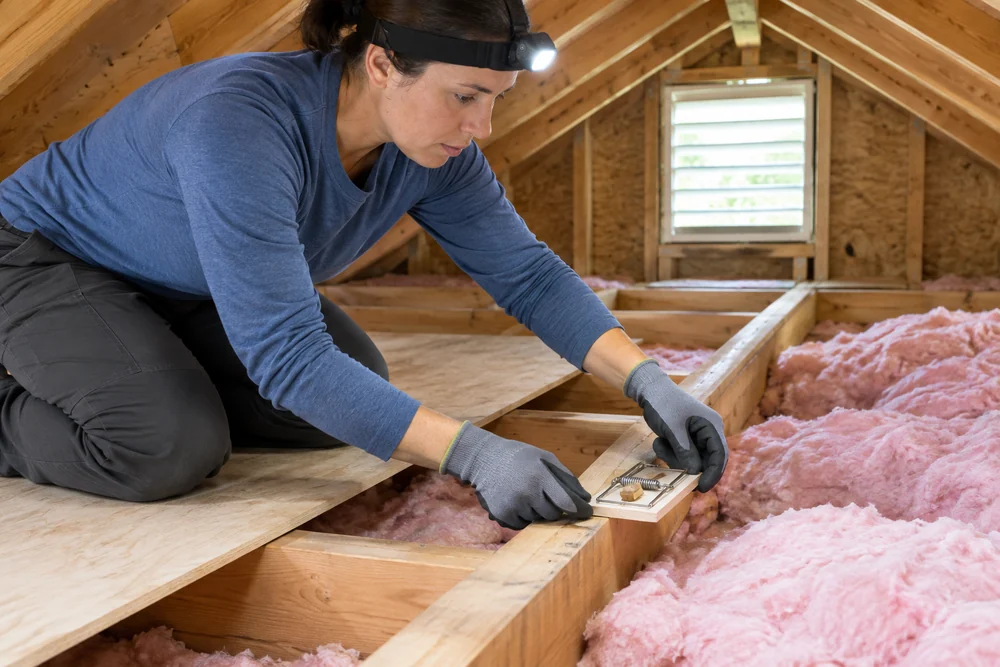
How to get rid of rats in attic spaces: step by step
- Gear up and plan a safe route. Wear gloves, long sleeves and a dust mask, and bring a good headlamp. Walk only on joists or a board laid across them; a foot through the drywall is a common attic injury.
- Find the runways. Look for droppings, rub marks and paths in the insulation. Roof rats travel along top plates, rafters, pipes and the edges of the attic, rarely across open space.
- Set enough traps. UC IPM recommends a dozen or more traps for a heavy infestation, spaced about 10 to 20 feet apart. For a few rats, start with six to eight. Place them directly on runways, on beams and ledges, with the trigger toward the wall or the direction of travel.
- Pre-bait for two to three nights. Rats are wary of new objects. Bait the traps but leave them unset until the bait is taken, then rebait and set them.
- Use the right bait, in small amounts. Roof rats like nuts, dried fruit, bacon or a piece of dry pet food. A pea-sized amount pressed into the bait cup works better than a big lump they can pull off.
- Secure traps to beams. Tie or wire snap traps to rafters so an injured rat can’t drag one away into the insulation.
- Check traps every day. Remove catches quickly to avoid odors and flies. Wearing gloves, spray the rat and trap with disinfectant, then double-bag them in tied plastic bags, as the CDC recommends.
- Keep trapping until the attic is quiet. Rats breed fast: roof rats typically have three or more litters a year of 5 to 8 young. Keep traps out until you’ve had no catches, no noises and no new droppings for at least a week.
- Seal the entry points. Only once activity has stopped, close every gap with metal (see the next section). Sealing too early traps rats inside, where they’ll chew new holes or die in the walls.
- Clean up safely. Disinfect droppings and nesting material following the CDC steps below, and replace insulation that is heavily soiled.
Attics are hot, dusty and full of hazards. Work in the cool morning, step only on joists, watch for exposed nails and keep a light on the wiring before you touch anything near it. Snap traps break fingers: set them with the handle, keep them out of reach of kids and pets, and never place traps on an open floor a pet can reach. Electronic traps must stay dry and should be switched off before you open them. Don’t touch a live rat with bare hands; rats can bite.
Why you shouldn’t use poison in the attic
Rat bait seems easy, but it’s a poor fit for attics. A poisoned rat often dies inside the insulation or a wall void, where you can’t reach it, and the smell can last for weeks. Pets and wildlife that eat a poisoned rat can be poisoned too.
The EPA restricts the strongest anticoagulant baits to professional use for exactly that reason: they pose greater risks to animals that feed on poisoned rodents. Consumer rat baits must be sold in ready-to-use bait stations. Traps let you confirm each catch and remove the body.
How to clean rat droppings in the attic (CDC method)
Rat urine and droppings can carry diseases. The CDC’s cleanup guidance is simple, and the first rule is the one most people break: never sweep or vacuum dry droppings, because that puts tiny particles into the air you breathe.
- Open attic vents and any windows, then leave the area for 30 minutes to let it air out.
- Put on rubber or plastic gloves.
- Spray droppings, urine stains and nests with an EPA-registered disinfectant or a fresh bleach solution (1.5 cups of household bleach per gallon of water) until very wet.
- Let it soak for 5 minutes, or as long as the disinfectant label says.
- Wipe it up with paper towels and bag the waste.
- Bag soiled insulation for removal, wash your gloves before taking them off, then wash your hands with soap and water.
Never mix bleach with ammonia, vinegar or other cleaners: it releases toxic gas. Ventilate before and during cleanup, wear gloves, keep kids and pets away, and follow the disinfectant’s label. If you develop fever, muscle aches or breathing problems after cleaning up after rodents, see a doctor and tell them about the exposure.
The equipment that helps
Our picks are based on manufacturer specs, expert guidance and patterns in verified owner reviews. For more models, see our best rat trap guide and our roundup of the best electric rat traps.
Best snap trap for rafters
Tomcat Rat Snap Trap
Best for: lining rafters and top plates where roof rats travel.
Why we picked it
- Interlocking teeth hold the catch securely
- Removable bait cup makes pre-baiting easy
- Strong owner ratings across thousands of reviews
Keep in mind
- You’ll need several, so plan on buying more than one
- Must be tied down on beams so it can’t be dragged off
Best value multi-trap setup
Victor Power Kill Rat Trap (2-pack)
Best for: covering more runways at once with an easy-set trap.
Why we picked it
- Oversized trigger pedal catches rats coming from any side
- High-impact kill bar
- Easy to set without touching the bait
Keep in mind
- Owner ratings are more mixed than the Tomcat
- Loud snap; keep it out of living areas
Best no-touch option
Victor Electronic Rat Trap
Best for: people who don’t want to see or handle a catch, in a dry attic.
Why we picked it
- Self-resetting, with LED catch indicator you can check from the hatch
- Rated for up to 35 kills per set of 4 AA batteries
- Enclosed design helps keep curious pets out
Keep in mind
- Mixed owner ratings: bait placement and battery strength matter
- Must stay dry and level
The classic Victor Rat Zapper is another enclosed option that owners like for tipping catches straight into a bag. For sealing small gaps while you wait to do permanent repairs, a copper mesh rodent kit packs into holes and won’t rust.
How to keep rats out of your attic for good
- Seal gaps with metal, not foam. UC IPM recommends closing any opening larger than 1/4 inch with steel wool or wire screen, and warns that rats chew through plastic and caulk. Use 1/4-inch galvanized hardware cloth or metal flashing over vents and roofline gaps, screwed or nailed in place.
- Screen every vent. Cover gable, soffit and roof vents with sturdy metal mesh so air still flows.
- Trim trees back. UC IPM advises cutting limbs back at least 3 feet from the roof. Many wildlife experts suggest 6 to 8 feet so squirrels can’t jump the gap either.
- Pick up food sources. Harvest fruit, pick up fallen fruit and nuts, use tight lids on garbage and bring pet food in at night.
- Inspect twice a year. Check the roofline and attic each spring and fall for new droppings or gnaw marks.
Skip ultrasonic plug-in devices as your main defense. There’s little evidence they work for long, and university extension experts note that rodents and other wildlife quickly get used to frightening devices. Read more in our guide to what actually repels mice and rats. If rodents have moved down into the walls, see how to get rid of mice in walls.
When to call a professional
Call a licensed pest control company if you hear rats in several parts of the attic or walls, if traps are still catching rats after two to three weeks, if you can’t safely reach the attic, if you smell a dead rat you can’t find, or if wiring has been chewed (have an electrician check it, since gnawed wires are a fire risk). Pros can also do full exclusion on steep or tall roofs and remove and replace contaminated insulation. Get a written plan that includes trapping, sealing and a follow-up visit.
Frequently asked questions
How long does it take to get rid of rats in the attic?
For a small problem, trapping usually takes one to three weeks, including a few nights of pre-baiting. A heavier infestation can take longer. Keep traps in place until you’ve had at least a week with no catches, noises or new droppings, then seal the entry points and clean up. Sealing too early can trap rats inside.
Will rats leave the attic on their own?
Rarely. An attic gives them warmth, shelter and a safe nest close to food outside, and roof rats can have three or more litters a year. Noise, lights or ultrasonic devices may move them around briefly, but they usually stay. Trapping and then sealing every gap is the reliable way to end it.
What attracts rats to the attic?
Shelter, warmth and easy access. Overhanging branches, utility lines and gaps at the roofline make the attic easy to reach, while fruit trees, bird feeders, pet food and open garbage nearby provide food. Insulation and stored boxes give them nesting material. Removing access and food is as important as trapping.
Should I use poison for rats in the attic?
It’s not a good idea. Poisoned rats often die in walls or insulation where you can’t remove them, causing a strong odor for weeks, and pets or wildlife that eat them can be poisoned too. Traps let you confirm and remove every catch. If you ever use bait outdoors, use only tamper-resistant bait stations and follow the label.
Is it safe to sleep with rats in the attic?
Rats in the attic don’t usually come into bedrooms, but they do contaminate insulation and can chew wiring, so act quickly. Keep the attic hatch closed, don’t handle droppings without gloves and disinfectant, and have chewed wiring checked by an electrician. See a doctor if anyone feels sick after contact with rodent droppings.
Do I need to replace attic insulation after rats?
Not always. Small, localized soiling can be cleaned and removed by hand following CDC steps. If droppings and urine are spread through large areas, or the insulation is matted and smells, replacement is the better choice. Insulation removal companies use commercial vacuums designed for this, which is safer than sweeping or a household vacuum.
Hearing noises in the daytime instead? Squirrels need a different approach, starting with a one-way door. Read our guide on how to get rid of squirrels in the attic.