
Quick answer: Here’s how to get rid of static electricity at home: raise indoor humidity to around 40% to 50% with a humidifier, stop over-drying laundry and use wool dryer balls or fabric softener, wear more cotton and wool than polyester, and moisturize your skin. For instant relief, touch metal with a key or your knuckles instead of your fingertips so the spark doesn’t hit your nerve endings.
If you’re looking for how to get rid of static electricity, you’re probably tired of getting zapped by doorknobs, light switches, the car door and even your dog. Static also makes clothes cling, hair fly away and dust stick to screens.
It’s almost always a winter problem, and that’s the clue to fixing it. The cause is dry indoor air, and the fix is a few small changes to your air, your laundry and your clothes.
What causes static electricity in your house?
Static builds up when two different materials touch and separate, like your socks on carpet or a sweater against a car seat. Electrons move from one surface to the other, leaving you carrying a charge. According to the University of Kentucky’s physics department, the energy is tiny, but the voltage can reach thousands of volts, which is why you feel and sometimes see the spark.
Normally, a thin film of moisture on surfaces lets that charge leak away before it builds up. Northeastern University physicist Ivana Dimitrova explains that water molecules in humid air redistribute charges so everything becomes neutral again. When the air is dry, there’s no moisture to carry the charge away, so it waits until you touch something metal.
Why is static worse in winter?
Cold outdoor air holds very little moisture. When your heating system warms that air, its temperature goes up but its water content doesn’t, so the relative humidity indoors drops. That’s why a heated house in January can feel as dry as a desert, and why shocks seem to come out of nowhere in winter.
Other things that make static worse
- Synthetic fabrics. Polyester, nylon and acrylic build charge more easily than natural fibers like cotton, wool, silk and linen.
- Carpet and rugs. Shuffling across synthetic carpet in socks or rubber-soled slippers charges you up with every step.
- Over-dried laundry. Clothes tumbling in a hot, dry dryer rub against each other and come out crackling, especially mixed loads of synthetics.
- Dry skin and hair. Dry skin holds a charge longer, and dry hair is the reason for flyaways after you pull off a hat.
- Rubber soles and car seats. Insulating shoes keep the charge on you, and sliding across a car seat is one of the most reliable ways to build one.
How to get rid of static electricity: step by step
- Measure your indoor humidity. Put a hygrometer in the rooms where you get shocked most. If it reads in the 20s or low 30s, dry air is your main problem.
- Raise humidity to about 40% to 50%. The EPA recommends keeping indoor humidity between 30% and 50%. For static, aim for the upper half of that range. A humidifier in the bedroom and the main living area makes the biggest difference. See our best humidifier for bedroom picks.
- Don’t go above 50%. The EPA advises against humidifying past 50%, because higher levels encourage mold and dust mites. If windows start fogging up, turn the humidifier down.
- Stop over-drying your laundry. Use a lower heat setting or a sensor-dry cycle and take clothes out while they’re barely dry. Separate synthetics from cotton when you can, or hang synthetics to dry.
- Add wool dryer balls or fabric softener. Wool dryer balls separate clothes so they tumble with less friction. Liquid fabric softener or dryer sheets coat fibers to reduce charge, a tip Northeastern’s physicists recommend.
- Treat clingy clothes on the spot. Lightly mist an anti-static spray on the inside of a skirt or the back of a sweater, or run a metal hanger over the fabric to discharge it.
- Choose natural fibers. Wear cotton, wool, silk or linen next to your skin and on your feet, especially in winter. Cotton socks on carpet build far less charge than synthetic socks.
- Moisturize your skin. Dermatologists recommend applying a moisturizer while skin is still damp after a shower or hand washing. It also helps with the dry, itchy skin that comes with winter air.
- Tame flyaway hair. Use conditioner, a leave-in product or a little hair oil, and swap plastic combs for metal ones or a natural-bristle brush.
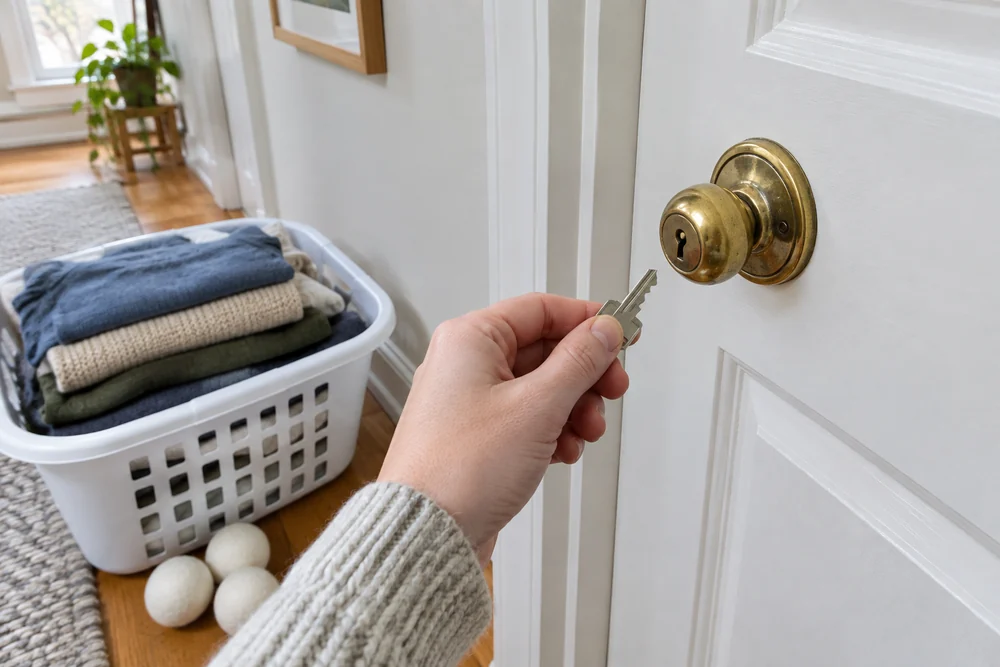
- Discharge before the spark. Hold a metal key or coin and touch it to the doorknob, light switch plate or car door first. The spark jumps from the key, not your fingertip. No key? Touch with your knuckles, which have fewer nerve endings than your fingertips.
Most people notice fewer shocks within a day or two of raising humidity. Laundry changes work on the very next load.
How to stop static shocks from your car
Car shocks happen when you slide off the seat and step onto the ground, leaving you charged. Before your feet touch the pavement, grab a metal part of the door frame and keep holding it as you stand up. The charge drains through the car instead of zapping you when you shut the door. Swapping a polyester coat for wool or cotton also helps.
How to stop static on carpets and rugs
Run a humidifier in carpeted rooms, wear cotton socks or leather-soled slippers instead of synthetic ones, and lightly mist the carpet with an anti-static spray labeled for carpet use, testing a hidden corner first. Regular vacuuming also helps, because static makes dust and pet hair cling to rugs. Our guide on how to get rid of dust in your house covers the rest.
How to protect electronics from static
A shock you barely feel can still damage sensitive electronics. If you’re installing RAM, swapping a graphics card or opening a device, work on a hard floor, not carpet, and touch a grounded metal object before handling parts. An anti-static wrist strap or mat, as Northeastern’s physicists suggest for sensitive work, gives you a safe path for the charge.
Unplug devices before opening them and follow the manufacturer’s instructions for grounding. Anti-static sprays are aerosols: use them in a ventilated room, keep them away from heat and open flames, don’t spray them on skin, electronics or screens, keep them out of reach of kids and pets, and follow the label. Test any spray on a hidden spot of fabric or carpet first.
The equipment that helps
You don’t need much. A humidifier does most of the work, a hygrometer tells you if it’s working, and two cheap laundry fixes handle the rest.
Best for static-free rooms
LEVOIT Classic 300S Smart Ultrasonic Humidifier
Best for: raising humidity in a bedroom or living room up to about 505 sq ft and holding it there.
Why we picked it
- Auto Mode keeps the room around 40% to 50%, right where static drops
- 6-liter top-fill tank runs through the night
- Quiet sleep mode with lights off
Keep in mind
- Use distilled water to avoid white dust
- Clean every few days, per EPA guidance
Measure before you buy
Govee H5075 Hygrometer Thermometer
Best for: finding out whether dry air is really behind your static shocks.
Why we picked it
- Shows humidity on your phone, with history and alerts
- Accurate to about ±3% RH
- Strong ratings across tens of thousands of owners
Keep in mind
- Limited Bluetooth range
Best for laundry static
Smart Sheep Wool Dryer Balls (6-pack, XL)
Best for: replacing dryer sheets and cutting static in mixed loads.
Why we picked it
- Reusable load after load, unlike dryer sheets
- Separates clothes so they tumble with less friction
- Very strong owner ratings across tens of thousands of reviews
Keep in mind
- Works best when you also avoid over-drying
- Less effective on loads that are all synthetics
Best quick fix for clingy clothes
Static Guard Fabric Spray (Original)
Best for: skirts, dresses, slips and sweaters that cling the moment you put them on.
Why we picked it
- Works instantly on clothes, upholstery and carpet
- Small can fits in a bag or drawer
- Long-running, well-rated product
Keep in mind
- Aerosol: use in a ventilated room and follow the label
- A spot fix, not a solution to dry air
For more humidifier options, including evaporative models that leave no white dust, see our full best humidifier for bedroom guide.
How to keep static from coming back
- Check humidity weekly in winter. A cold snap can drop indoor humidity fast. Keep it between 40% and 50% when you can.
- Clean your humidifier. The EPA recommends emptying and refilling portable humidifiers daily and cleaning them every third day. A dirty humidifier can spread mold and bacteria.
- Watch for too much moisture. Condensation on windows or a musty smell means you’ve gone too far. Our guide on how to reduce humidity in your house helps you find the balance, and how to get rid of condensation on windows covers foggy glass.
- Keep the laundry routine. Lower heat, wool dryer balls and separating synthetics prevent static on every load.
- Dress for winter static. Natural fibers next to your skin, leather-soled shoes indoors and a wool coat over a polyester one.
- Use houseplants. Plants release some moisture into the air, which helps a little in small rooms, though it won’t replace a humidifier.
- Keep pets brushed. Static makes pet hair cling to furniture and fabric. A quick mist of water on your hands before petting helps. If fur is already everywhere, see how to get rid of pet hair on a couch.
When to call a professional
Static shocks are a nuisance, not usually a hazard. Call a licensed electrician if you feel a shock from an appliance, an outlet or a faucet even when the air is humid, if lights flicker or outlets feel warm, or if a shock happens every time you touch the same metal fixture. That points to a wiring or grounding problem, not static. If your whole house stays very dry despite room humidifiers, an HVAC contractor can look at a whole-house humidifier. And if dry air leaves you with persistent skin, nose or breathing symptoms, talk to a doctor.
Frequently asked questions
How do I stop getting shocked by everything?
Raise your indoor humidity to around 40% to 50% with a humidifier, wear cotton or wool instead of synthetics, and moisturize your skin. When you need to touch metal, hold a key or coin and touch it to the surface first, or use your knuckles. Leather-soled shoes and cotton socks also build less charge on carpet.
Does a humidifier really help with static?
Yes. Static builds up when there’s too little moisture in the air to carry the charge away. A humidifier that raises a dry room into the 40% to 50% range usually makes shocks and clingy clothes much less frequent. Just don’t push past 50%, which the EPA warns can encourage mold and dust mites.
Why do I get shocked more than other people?
Your clothes, shoes, skin and habits all matter. Rubber-soled shoes, synthetic fabrics, dry skin and shuffling across carpet let you build more charge than someone in leather shoes and cotton. Moisturizing, changing fabrics and using a humidifier in rooms where you spend the most time usually fixes it.
What is the fastest way to get rid of static in clothes?
Mist a little anti-static spray on the inside of the garment, or rub a metal hanger over the fabric to discharge it. A few drops of water or hand lotion rubbed lightly between your hands and smoothed over the fabric can also help in a pinch. For the long term, avoid over-drying and use wool dryer balls.
Do wool dryer balls reduce static?
They help. Wool dryer balls keep clothes apart so they rub together less, and manufacturers say they can shorten drying time, which means less over-drying. They work best when you also use a lower heat setting and pull clothes out before they’re bone dry. Loads of pure synthetics may still need a dryer sheet or anti-static spray.
Can static electricity hurt you?
Everyday static shocks at home are painful but typically harmless for people. They can damage sensitive electronics, so ground yourself before handling computer parts. If you get shocked by an appliance, outlet or plumbing fixture even in humid weather, that’s not static: stop using it and call an electrician.
Dry winter air affects more than static. To pick the right humidifier for your room, read our best humidifier for bedroom guide next.
Sources
- Northeastern University: 10 Tips to Get Rid of Static Electricity This Winter
- University of Kentucky Physics & Astronomy: Why static shocks happen in winter
- EPA: A Brief Guide to Mold, Moisture and Your Home
- EPA: Use and Care of Home Humidifiers
- American Academy of Dermatology: Dermatologists’ tips to relieve dry skin